Space Runner: Asteroid Navigation

Reviews
Space Runner: Asteroid Navigation strips space flight down to a single vertical input, then builds challenge through random asteroid patterns and progressive speed. The result is a pick-up-and-play arcade game that rewards calm timing over twitch reflexes alone. Global leaderboards give each run a competitive purpose, and the vibrant starfield keeps the ship readable during tight dodges. The main limitation is inherent to the genre: repetition is the point, so players seeking varied objectives or narrative may find it thin. It suits score-chasers and short-session players.
Description
Core Flight Mechanic
Space Runner: Asteroid Navigation reduces space flight to a single input: tap or click to make the ship rise, release to let it fall. That binary control defines every decision. You are not steering left or right; you are managing altitude against a scrolling field of asteroids. The ship responds instantly, so the skill lies in timing short taps for small corrections and longer holds for larger climbs. Because the ship is described as nimble, overcorrection is a real risk—holding too long can send you into an asteroid above just as easily as releasing too early drops you into one below.
Procedural Asteroid Patterns
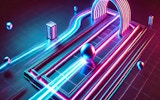
Each run generates a new arrangement of asteroids, so memorizing a fixed sequence is not an option. The game asks you to read gaps as they appear and commit to a vertical path before the next obstacle arrives. [IMG_1] Patterns vary in density and spacing, and the input notes that progressive difficulty keeps the challenge fresh. In practice, that means the safe corridors between asteroids narrow and the scroll speed increases the longer you stay alive. Points accrue for every asteroid you dodge, turning survival into a scoring system where risk and reward are tied to how long you can maintain composure.
Visual Feedback and Atmosphere
The presentation uses colorful graphics with animated asteroids against a dynamic starry background. These are not just decorative choices; the animated motion of asteroids helps you track their approach, and the starfield provides a sense of forward speed. Vibrant space visuals also make the ship’s position easy to read against the background, which matters when gaps are tight. The overall look supports the arcade tone without adding mechanical complexity.
Competition and Session Design
Global leaderboards let you compare your score with players worldwide, which gives each run a purpose beyond personal bests. Sessions can be short or extended depending on how long you survive, and the one-touch control scheme means you can start a run almost immediately. The combination of random patterns, increasing speed, and leaderboard ranking creates a loop where a failed run feels like information for the next attempt rather than wasted time.




Editorial Notes