Puzzle Explorer Adventure

Reviews
Puzzle Explorer Adventure strips away direct character control and builds its challenge around a single decision: where and how hard to launch. That constraint works because the levels are designed with varied surfaces and coin placements that reward careful reading. The physics engine adds slight unpredictability, so retries feel like learning rather than repetition. It suits players who enjoy casual puzzle games with a skill component, though those seeking fast action or story will find it minimal.
Description
Aiming and Launching
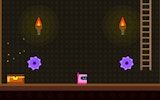
In Puzzle Explorer Adventure, you control a launcher, not the character directly. Your only input is setting the launch angle and power. Once released, the character bounces, rolls, and tumbles according to the physics of the level. Success depends on reading the environment before you fire, because you cannot steer mid-flight.
Level Layouts and Coin Placement
Every stage arranges obstacles and surfaces differently, and coins are scattered across those spaces. Some coins sit in plain sight; others require multiple bounces off walls or slopes. The layout dictates the route, so the puzzle is figuring out which surfaces to use and in what order. Because the physics engine makes each attempt feel slightly different, no two launches follow an identical path.
Controls and Accessibility
Mouse or touch input handles everything: click and drag to set trajectory, then release to launch. There are no complex button combinations or timed inputs. This simplicity makes the game approachable for all ages, but the level design still offers a genuine challenge for players who want to optimize their route.
Learning Through Retries
The game encourages trial and error. You can retry a level as many times as needed, and each attempt teaches you something about how the character interacts with a particular surface. Over time, you build an intuition for how angle and power translate into movement, which helps you plan more efficient paths and collect all coins with fewer attempts.




Editorial Notes