Doodle Platformer Arcade Run

Reviews
Doodle Platformer Arcade Run commits to a single idea: remove the jump button and make positioning the entire challenge. That works well for hyper-casual play, because runs are short, failure is cheap, and the difficulty climbs gradually enough to keep attempts feeling fair. The minimalist visuals keep platform edges and enemy paths readable. The trade-off is limited depth. There is no upgrade system, no story, and no variety beyond the shifting platform layouts, so players who want progression or long sessions may lose interest quickly.
Description
How a Run Actually Works
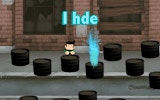
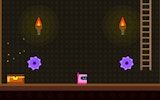
Doodle Platformer Arcade Run removes the jump button entirely. Your character moves forward on its own, and directional inputs are the only control you have. The character jumps automatically the moment it lines up with an approaching platform. That single design choice turns every run into a positioning test: you are not deciding when to jump, you are deciding where to be when the jump happens. A successful landing adds to your score. Falling or touching a roaming enemy ends the run immediately.
Reading Platforms and Enemies
Platforms do not sit still. Their layouts shift between sessions, so memorizing a sequence will not carry you far. What stays consistent is the demand for early positioning. Enemies roam the same space you need to land in, which means a safe platform can become unsafe while you are still in the air. The tension comes from overlapping timers: the platform's approach, the enemy's path, and your own reaction window all resolve at once. Players who wait until the last moment to adjust usually run out of room.
Difficulty Curve and Session Length
Difficulty rises gradually rather than spiking. Early platforms give generous alignment windows; later ones tighten the margin and pair more awkwardly with enemy movement. Because runs are short by design, the game fits the hyper-casual pattern of repeated quick attempts. Each failure is cheap, which encourages one more try rather than frustration. The minimalist look keeps visual noise low so the important information, platform edges and enemy positions, stays readable.
What Separates Good Runs from Short Ones
Rhythm matters more than raw speed. Players who settle into a steady cadence of small directional corrections tend to last longer than those making large panic adjustments. Watching enemy patrol patterns before committing to a landing is more reliable than reacting after. Since the game ends on a single mistake, consistency beats risk-taking. The reward structure is simple: longer survival means a higher score, and there is no separate resource or upgrade system to manage.





Editorial Notes