Reflex Arena: Survival Run

Reviews
Reflex Arena: Survival Run works because it refuses to add unnecessary layers. The character is always moving, obstacles arrive faster over time, and score equals survival time. That clarity makes it easy to start and hard to master. The main limitation is variety: without power-ups or modes described, the appeal depends on how much you enjoy chasing personal bests. Players who prefer deep progression may find it thin, while reflex-focused arcade fans will get exactly what the title promises.
Description
Survival Through Movement
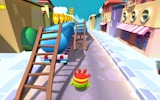
Reflex Arena: Survival Run strips arcade action down to one job: keep moving and do not get hit. Your character never stops, and obstacles arrive from multiple directions. The only input is movement, controlled by keyboard on desktop or touchscreen on mobile. There are no attacks, combos, or power-ups to manage. Every run starts fresh, and the game ends the moment you collide with an obstacle.
How Difficulty Escalates
Obstacles appear at an ever-increasing speed and frequency. Early seconds give you room to read the layout; later seconds demand split-second decisions. A brief invincibility window at the start lets you assess the opening pattern and choose a first route. Because the ramp is continuous, each attempt feels slightly different even though the rules never change. That design keeps short sessions tense without adding new mechanics.
Scoring and Replay Loop
Your score is survival time. Nothing else feeds into it, so improvement is easy to measure: last longer than your previous run. This creates a competitive loop against your own best rather than against complex systems. The clean visual style keeps attention on the action, and audio cues help you anticipate hazards before they reach you. Runs are short by design, which makes the game suitable for quick repeatable plays.
Controls and Platform Notes
Cross-platform controls work on desktop and mobile, and the game is accessible globally with no regional restrictions. The control scheme is simple enough that no tutorial is required. Responsive input matters because late-game obstacles leave little margin for error. Small, precise adjustments tend to work better than large, erratic movements, especially once speed increases.









Editorial Notes