Short Life 2 Adventure Platformer

Reviews
Short Life 2 Adventure Platformer builds its challenge around ragdoll physics, turning simple left-right movement and jumping into a test of observation and timing. The humor from unpredictable tumbles keeps frustration low, while stars hidden in risky spots give completionists a reason to replay. It suits players who enjoy puzzle-like platforming and do not mind loose controls. The main limitation is that the input does not specify how many levels or characters exist, so the depth of unlockables remains unclear.
Description
Ragdoll Physics and Level Navigation
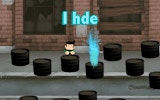
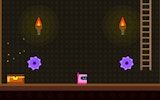
Short Life 2 Adventure Platformer uses ragdoll physics to govern how the character moves and reacts to the environment. This means every jump, fall, or collision produces unpredictable, often comical results. The core objective is straightforward: guide the character from the start of a level to its end. However, each level is built around obstacles that demand careful timing and precise input. Because the character responds loosely, players must account for momentum and limb positioning rather than relying on tight, arcade-style controls. This design turns each level into a small puzzle where observation and patience matter more than speed.
Controls and Moment-to-Moment Decisions
Players control the character with keyboard inputs. Left and right movement is handled by the arrow keys or A and D. The up arrow or W key makes the character jump or stand up, while the down arrow or S key triggers a crouch. These simple inputs drive a surprisingly demanding loop: watch an obstacle, judge its timing, then commit to a movement. A single mistimed jump can send the ragdoll tumbling, but the game allows an immediate restart, so failure stays low-stakes. The challenge comes from reading each hazard correctly and acting at the right moment.
Star Collection and Unlockable Characters
Stars are placed throughout each level, often in spots that require extra risk or a different route. Collecting them unlocks new characters. The input does not specify how many characters exist or whether they change gameplay, only that they may offer different visual styles or advantages. This uncertainty is part of the progression: players weigh whether to chase a tricky star now or finish the level safely. The star system also encourages replaying levels to improve routes, since a clean run often means grabbing stars that were previously skipped.
Difficulty, Tone, and Audience
The ragdoll reactions add a lighthearted layer to what is otherwise a test of timing and planning. There is no mature content, and the game is designed to be suitable for players of all ages. As a sequel, it introduces new obstacles and level layouts that build on the original Short Life. The difficulty curve comes from increasingly demanding obstacle sequences rather than from complex controls, making it approachable for newcomers while still offering a satisfying challenge for players who want to collect every star.




Editorial Notes