Block Puzzle Challenge
Reviews
Block Puzzle Challenge takes the familiar stacking formula and adds a physics layer that makes every placement matter. The goal is straightforward: build a tower without letting any block fall off the screen. What gives it depth is the way weight and balance interact, turning each drop into a small strategic decision. It suits players who enjoy spatial puzzles and don't mind restarting after a collapse. The lack of complex controls keeps the focus on thinking ahead, though the rising speed and trickier shapes will test your timing.
Description
Stacking Against Gravity
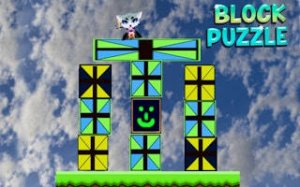
Block Puzzle Challenge asks you to build a tower from falling blocks of different shapes and sizes. Each block must be rotated and placed so the structure stays balanced. Gravity is the constant opponent: a poorly positioned piece can shift weight, destabilize the tower, and send blocks off the screen, ending the run. The game combines puzzle planning with basic physics, so every placement has consequences beyond the immediate fit.
Controls and Placement
You drag and rotate blocks as they descend from the top of the screen. There is no complex control scheme to learn, which keeps attention on decision-making. The game provides feedback on your tower's stability, helping you see how a placement affects the whole structure. As you progress, blocks may fall faster or arrive in more complex shapes, raising the demand for quick, accurate judgment.
Building a Stable Foundation
Success depends on foresight. A wide, even base supports more weight higher up, while lopsided stacking invites collapse. Balancing weight across the tower matters as much as fitting each block neatly. Because the physics engine governs how pieces interact, a move that looks fine in isolation can still create instability later. Patience and a steady hand help, but planning two or three placements ahead is what separates short runs from tall ones.
Who It Suits
The rules are easy to understand, and the game is free to play online without downloads. Sessions can be short or extended, making it suitable for quick breaks or longer play. Players who enjoy spatial puzzles, light physics challenges, and gradual skill improvement will find the loop rewarding. The difficulty curve is gentle at first and grows as speed and block complexity increase.










Editorial Notes