Chess Metamorphosis Puzzle
Reviews
Chess Metamorphosis Puzzle is a thoughtful twist on chess where capturing a piece transforms your piece into the captured type. Across 16 boards, the goal remains cornering the king, but the path shifts with every capture. The lack of a timer and desktop-browser focus suit players who prefer careful analysis. Newcomers may need time to adjust, but early boards ease the learning curve. Best for chess enthusiasts and logic-puzzle fans who enjoy adaptive planning.
Description
The Capture-to-Transform Rule
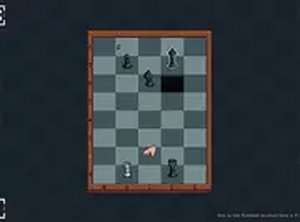
Chess Metamorphosis Puzzle takes the familiar board and pieces of chess and rewires one core rule: when you capture an opponent's piece, your capturing piece immediately becomes the type of piece it took. A pawn that captures a rook becomes a rook, inheriting its movement range. This single change ripples through every decision, because your available moves after a capture depend on what you just took, not on what you started with.
Board Variety and Puzzle Goals
The game includes 16 distinct boards, each arranged to test how well you handle the transformation rule. Some boards begin with clustered pieces that trigger rapid transformations, while others spread pieces out and demand longer-term planning. The objective on every board is to corner the opponent's king, similar to checkmate, but the route to that goal shifts with each capture. Because layouts and piece types vary, no two puzzles play the same way.
Controls and Pacing
Chess Metamorphosis Puzzle runs in desktop browsers and uses mouse clicks or keyboard inputs to select and move pieces. The interface highlights legal moves for the selected piece, which helps when a transformation changes its movement pattern. There is no timer, so you can evaluate each position at your own pace. That makes the game better suited to players who prefer deliberate analysis over speed.
Adaptive Planning and Learning Curve
Success depends on thinking several moves ahead while accounting for how each capture will alter your piece's capabilities. A capture that looks strong might leave you with a piece that cannot escape a counterattack. Controlling the center matters even more, because transformed pieces there can threaten multiple areas. New players may find the rule disorienting at first, but early boards use simple piece combinations to demonstrate the mechanic. Later boards combine multiple piece types and require precise capture sequencing. Replaying a board often reveals a more efficient order of captures.









Editorial Notes