Color Cluster Puzzle Quest
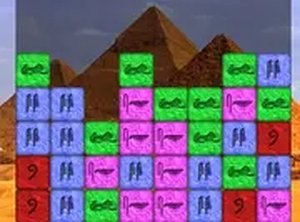
Developer: Adapt Creations
Updated: 2026-10-01
Reviews
Color Cluster Puzzle Quest keeps its rules simple: find same-colored adjacent blocks, click to remove them, clear the board. The depth comes from deciding which clusters to clear first and anticipating how the board changes afterward. The three-life system punishes random clicking, and the absence of a timer makes it accessible for short or long sessions. It suits players who enjoy logic puzzles and methodical planning rather than reflex-based challenges. The main limitation is that the core loop may feel repetitive for those seeking variety in puzzle mechanics.
Description
Reading the Board
Every stage in Color Cluster Puzzle Quest presents a grid of colored blocks. Your task is to locate clusters of adjacent blocks sharing the same color, then click any block in that group to remove the entire cluster. The rule never changes, yet the decision of which cluster to clear first shapes everything that follows. Removing a small group might open a path to a larger one, or it might strand isolated blocks that become impossible to clear.[IMG_1]
Why Move Order Matters
The game rewards observation over speed. Because there is no timer, you can study the board before committing to a selection. Chain reactions occur when removing one cluster causes remaining blocks to shift or merge, creating new groups that were not visible before. Experienced players learn to anticipate these cascades, choosing moves that set up bigger clears down the line. Clicking without a plan is the fastest way to waste a life.[IMG_2]
Lives and Stage Progression
You start with three lives. A move that does not contribute to clearing the stage costs one life, and failing to complete a stage costs one as well. Lose all three and your run ends, resetting your progress. Early stages use simple layouts that let you learn the rhythm of cluster detection. Later stages tighten the grid and introduce arrangements where a single careless selection can leave the board unsolvable.[IMG_3]
Scoring and Session Length
A built-in high score tracker records your best runs, giving you a benchmark to beat on return visits. Since stages have no time limit, the game fits both quick breaks and extended sessions. The free browser format means no download or installation, and touch controls adapt to desktop and mobile screens alike.Compatibility
💻 Desktop | 📱 Mobile | 📟 Tablet
– All supported · Best with Chrome or Safari
Faq
Can I undo a move in Color Cluster Puzzle Quest?
The game does not mention an undo function. Each selection is final, which is why planning ahead matters. If a move fails to contribute to clearing the stage, it costs a life, so there is a real penalty for guessing. Study the board before clicking.
What happens when I lose all three lives?
Losing all three lives ends your current run and resets your progress. The high score tracker preserves your best performance, but you will need to start over from the beginning stages. This makes each life feel valuable and discourages careless clicking.
Does Color Cluster Puzzle Quest work on phones and tablets?
Yes. The game runs entirely in a web browser and is optimized for both desktop computers and mobile devices. Controls are touch-friendly and adapt to different screen sizes, so you can play on a phone, tablet, or computer without installing anything.
Is there a time limit on each stage?
No. Color Cluster Puzzle Quest has no time limit, so you can take as long as you need to study the board and plan your moves. The challenge comes from limited lives and increasingly complex layouts, not from racing a clock.
How does the scoring system work?
The game includes a built-in high score tracker that records your best performances. While the exact scoring formula is not detailed, the tracker lets you measure improvement over time. Larger clusters and efficient stage clears likely contribute to higher scores, giving returning players a clear goal.
What makes later stages harder than early ones?
Early stages use simple block arrangements that help you learn the basic flow of cluster detection. Later stages present more intricate patterns with less forgiving layouts. You need sharper observation and more deliberate planning because a single poor choice can leave blocks stranded.



Editorial Notes