Quick Dodge Maze

Reviews
Quick Dodge Maze focuses on one well-defined skill: steering a small character across a screen while avoiding moving dark shapes. The minimalist look reduces distraction, and the endless procedural format keeps each attempt slightly different. Difficulty rises gradually through more obstacles and faster movement, which suits players who enjoy score chasing without long commitments. The main limitation is narrow scope; anyone seeking varied modes or story content will find the loop repetitive by design.
Description
Core Loop and Objective
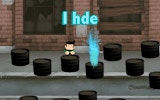
Quick Dodge Maze strips the arcade formula down to one repeated action: move a small character from the left edge of the screen to the right. The field holds nothing but your character and dark shapes that drift across the space. Touch one and the attempt ends; reach the far side and you earn a point. The challenge resets immediately, so a session is a chain of short crossings rather than a long stage. That instant reset is what makes the game easy to start and easy to stop after a few minutes.
Why the Minimalist Look Works
A light background and dark obstacles create high contrast without decorative clutter. There are no flashy effects or distracting animations competing for attention. The design keeps your eyes on two things: the character and the incoming threats. For younger players, that clarity lowers the barrier to entry. For adults, the lack of visual noise makes the game feel calm rather than frantic, even when obstacle speed increases.
How Difficulty Ramps Up
Early rounds move slowly and leave generous gaps, giving you time to learn how the character responds. As you continue, more obstacles appear and their movement speed rises. Later attempts demand faster decisions and more precise steering. The curve is gradual rather than sudden, so each failure feels like a timing mistake you can correct instead of an unfair spike. That steady ramp keeps the loop engaging without requiring a long commitment.
Endless Format and Skill Growth
Every session is procedurally generated, so no two attempts play out the same way. The endless structure turns the game into a personal best chase. Over time, players tend to notice improvements in reaction time and hand-eye coordination. Practice pays off in short bursts, which suits anyone who wants to sharpen reflexes without dedicating hours to a single run.





Editorial Notes