Tile Harmony Logic Challenge
Reviews
Tile Harmony Logic Challenge is a casual puzzle game built on a single, readable rule: tapping a tile flips it and the four tiles touching it. That rule stays consistent while grids grow larger, so difficulty comes from planning rather than new mechanics. The absence of timers and score multipliers makes it a good fit for players who want quiet deduction, including families and older adults. The main limitation is that the input describes only one core mechanic, so players seeking varied modes or story content may find the scope narrow.
Description
The Core Mechanic
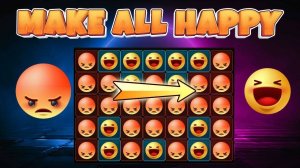
Every puzzle in Tile Harmony Logic Challenge revolves around a single action: tapping a tile. That tap flips the tile's appearance and also toggles the tiles directly above, below, left, and right of it. Because each tap affects up to five positions, the board rarely changes in the way a new player expects. The goal is to bring the whole grid into a uniform state, which means planning a sequence rather than reacting to individual tiles.
[IMG_1]
How Difficulty Grows
Early boards are small and introduce the basic flipping pattern with few distractions. As players advance, the grids become larger and more intricate, so a single tap can ripple through more of the board. There are no timers and no score multipliers. Progress depends on logical deduction, and each solved puzzle ends without pressure or penalty.
Visual and Interface Design
The game uses bright, clean graphics with a cheerful color palette. Tile states are clearly distinct, so the board can be read at a glance. The interface stays uncluttered, with no distracting animations or sounds. That restraint supports calm, focused sessions and makes the puzzle easier to scan when grids grow complex.
Controls and Accessibility
Controls are limited to tapping, which makes the game playable on touchscreens or with a mouse. There is no text-heavy instruction; the flipping rule is learned through play. This keeps the game approachable for young children and older adults alike. Sessions can last a few minutes or stretch into longer problem-solving runs.
Strategy Without Stress
Because there is no time limit, players can experiment with different tap sequences. The game rewards pattern recognition and planning ahead. Some puzzles may require multiple attempts, but each failure reveals something about how the tiles interact. Trial and error is part of the design and is never penalized.




Editorial Notes