Seasonal Harvest Solitaire Challenge
Reviews
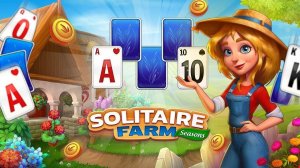
Seasonal Harvest Solitaire Challenge mixes traditional solitaire rules with a farm that cycles through spring, summer, autumn, and winter. The lack of timers and the focus on thoughtful moves make it accessible to newcomers, while Tri Peaks, Pyramid, and Klondike modes offer enough variety for experienced players. Daily missions add a reason to return, and the seasonal farm provides visible progress. The main limitation is that the core loop stays close to classic solitaire, so players seeking fast action may find it too slow.
Description
Card Pairing Across the Tableau
Seasonal Harvest Solitaire Challenge follows classic solitaire rules: you clear the tableau by pairing cards in descending order with alternating colors. Each level presents a fresh arrangement of face-up cards, so you need to plan which pairs to remove first to uncover hidden cards and complete the sequence. The game rewards thoughtful moves rather than speed, which keeps it approachable for newcomers while still giving experienced solitaire players something to think about.
A Farm That Changes with the Seasons
As you advance, the virtual farm cycles through spring, summer, autumn, and winter. Each season brings its own visual theme and unlocks new decorative items and crops. The farm grows alongside your card-solving progress, so the changing landscape gives you a visible record of how far you have come. That connection between puzzle progress and farm development is the main reason to keep playing beyond a single session.
Daily Missions and Multiple Modes
Daily challenges offer extra rewards and give you a reason to return regularly. The game includes several solitaire modes, such as Tri Peaks, Pyramid, and Klondike, each with distinct rules and strategies. Switching between modes prevents the card play from feeling repetitive and lets you pick a style that matches your mood or available time.
Relaxed Pace and Strategic Thinking
There are no timers or competitive pressure, so you can take as long as you need on each move. Tutorials guide beginners through the basics, and the interface is designed so you can start a session without reading complex instructions. Success depends on pattern recognition and forward planning: prioritizing moves that reveal new cards or create chains. Regular play sharpens those skills, turning each puzzle into a mental exercise rather than a race.





Editorial Notes