Timber Twist Logic Challenge
Reviews
Timber Twist Logic Challenge builds its puzzles around one clear idea: remove screws and bolts in the right sequence to dismantle a wooden structure. The game supports that idea with a steady difficulty curve, a subtle hint system, and a quiet wood-and-metal presentation. Its main limitation is that the core loop stays consistent across levels, so players seeking constant novelty may find the format repetitive. Those who enjoy sequential reasoning and low-pressure sessions will get the most from it.
Description
Fastener Removal as a Logic Problem
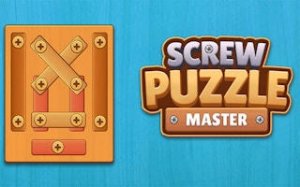
Every level in Timber Twist Logic Challenge presents a wooden assembly held together by screws and bolts. Your goal is to remove those fasteners in the right order until the structure comes apart completely. The puzzle is not about speed; it is about reading the assembly. Some screws carry the weight of other pieces, and pulling them too early can lock the remaining parts in place. A wrong move forces you to reconsider the sequence. That single rule—order matters—drives every decision you make.
How Difficulty Grows Without Overwhelming
Early levels use a handful of screws in plain arrangements, which gives you room to learn how load distributes through a simple frame. Later puzzles introduce overlapping pieces, fasteners tucked behind other components, and sequences that require several steps of planning before you touch anything. The curve is steady rather than steep, so each new layout adds one or two ideas instead of a dozen. Because every level is a distinct arrangement, you cannot rely on a memorized pattern; you have to read the structure in front of you.
Warm Wood, Quiet Feedback
The visual style leans on realistic timber textures and metallic fasteners, with a clean screen and no distracting animations. Audio stays soft and ambient, mimicking the turn of metal against wood. That combination keeps attention on the puzzle rather than on spectacle. For players who use games to unwind, the absence of loud effects and cluttered interfaces matters as much as the puzzle itself.
Hints, Session Length, and Who It Suits
When a sequence stalls, a built-in hint system points to the next screw worth focusing on without exposing the full solution. That keeps discovery intact while preventing a hard stop. Puzzles can be finished in a few minutes, so the game fits short breaks as well as longer sessions. There are no timers, and the large number of levels gives the gradual difficulty room to breathe. Players who enjoy sequential reasoning, calm presentation, and family-friendly content will find the format familiar and low-pressure.






Editorial Notes