24 Hole Golf Challenge
Reviews
24 Hole Golf Challenge strips golf down to aiming and power, then builds 24 fixed layouts around that single decision. The lack of timers, penalties, and simulation depth keeps it welcoming for casual players and children, while the rising difficulty and replay option give accuracy-focused players something to refine. It is not a realistic golf game, and anyone wanting clubs or courses will be disappointed, but as a short-session precision exercise it is coherent and honest about what it offers.
Description
Core Aiming and Power Mechanics
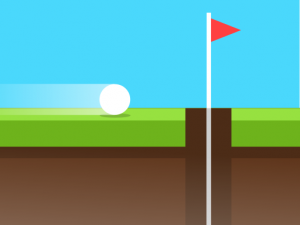
Each level in 24 Hole Golf Challenge asks one thing: get the ball in the hole. You use a mouse or touch input to set direction and shot strength, then release. There is no club selection, wind gauge, or spin control to manage. That narrow focus is the point. Because the only variables are angle and power, every miss can be traced to a specific decision, which makes improvement feel earned rather than lucky.
Level Layouts and Rising Difficulty
The game spreads its challenge across 24 holes. Early levels keep the path to the cup relatively open, giving you room to calibrate how much power a given distance requires. Later holes introduce obstacles and terrain variations that change how the ball travels, so a shot that worked on hole five may need a different approach on hole fifteen. The layouts are not randomized; they are fixed challenges you can learn and replay.
Feedback, Replay, and Progression
After each attempt the game shows where the ball ended up, letting you compare your intended line against the actual result. That feedback loop is the main teaching tool. You can replay any level to chase a cleaner result, and clearing a hole unlocks the next one automatically. Progress is linear, so there is always a clear next target.
Session Length and Audience
Holes are short enough to finish in a few minutes, which makes the game easy to pick up during a break. The absence of timers or penalties for extra strokes keeps the tone relaxed. It suits players who want a low-pressure accuracy exercise and younger players who can grasp the controls immediately. Anyone expecting a full golf simulation with clubs and courses will find something much simpler here.









Editorial Notes