Twin Lens Duo Action

Reviews
Twin Lens Duo Action stands out for making dual-character control the main challenge rather than a side feature. The coin-collection objective gives each stage a clear goal, and the one-catch-ends-the-level rule keeps tension high without violence. It suits players who enjoy planning routes and timing movements, especially pairs who want to communicate. The main limitation is that the input does not confirm scoring details or exact stage counts, so those expecting deep progression systems should set expectations accordingly.
Description
Controlling Two Characters at Once
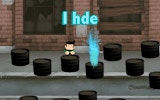
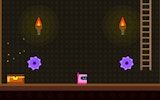
Twin Lens Duo Action hands you two camera characters and expects you to move both at the same time. Each character responds independently, so you cannot drag one along behind the other. The keyboard or on-screen controls let you split their paths, cover separate sections of a stage, and keep both out of harm's way. That split attention is the game's defining demand: every decision for one character affects how much room the other has to maneuver. [IMG_1]
Coin Collection and Stage Survival
Every stage is a self-contained puzzle with one clear win condition: gather all the coins, then reach the exit. Coins sit in open lanes and tucked-away corners, and some areas close off as obstacles shift. Because a single catch ends the level, you have to weigh speed against safety. The game rewards players who watch obstacle patterns before committing, then move both characters through gaps in sequence rather than at random. [IMG_2]
Co-op Play and Shared Communication
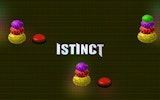
Playing with a friend changes the experience without changing the rules. One person takes each character, which turns the level into a live coordination exercise. You have to say who goes where, when to wait, and which coins to grab first. The game's cooperative tag is not decorative; it reflects a design where two players naturally divide attention and talk through timing. Solo play is supported, but it asks one person to manage both roles. [IMG_3]
Difficulty Curve and Replay
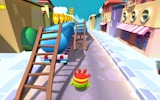
Early stages introduce the basics with simple layouts and slow obstacles. Later stages add more intricate designs and new obstacle behavior, so the challenge grows through layout complexity rather than new rules. Replaying earlier levels is a practical way to sharpen coordination and learn timing patterns. The bright visuals and simple controls keep the game approachable for all ages, while the later stages give experienced players something to work toward.





Editorial Notes