Block Move Puzzle 2
Reviews
Block Move Puzzle 2 keeps its scope narrow: one block, one crater, and a grid that gets progressively harder to navigate. The absence of a timer removes pressure and pushes the challenge toward foresight, which suits players who enjoy spatial reasoning more than reflex. The plain interface and offline support make it practical for short breaks. The main limitation is that a single wrong move forces a restart, which may frustrate players who prefer experimentation over planning.
Description
One Block, One Crater
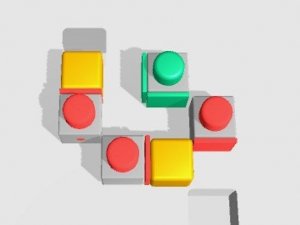
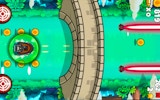
Every level in Block Move Puzzle 2 hands you the same basic task: move a block across a grid until it sits in the crater. That single objective never changes, which is why the game is easy to start. What changes is the space around the block. Early layouts are open and forgiving, giving you room to learn how the block responds to each input. Later layouts tighten that space and add obstacles, so the same simple goal turns into a planning problem.
Reading the Grid Before You Move
Movement is handled with arrow keys on a keyboard or swipe gestures on a touchscreen. The block only goes where you send it, and there is no undo. One wrong step can wedge the block against an obstacle and leave it stuck, forcing a level restart. That design choice is the whole game: it rewards players who trace the full route in their head before committing. Because there is no timer, you can sit on a single puzzle as long as you like.
How Difficulty Actually Scales
The difficulty curve is gradual rather than sudden. Opening puzzles exist to teach the relationship between your input and the block's position. Once that clicks, later stages introduce obstacles and tighter arrangements that shrink your margin for error. The result is a steady ramp where each new layout tests the same skill — foresight — against a more crowded board. Players who enjoy spatial reasoning tend to notice the pattern quickly: the puzzle is rarely about speed, it is about sequence.
Presentation and Practical Details
The interface stays deliberately plain. There are no timers, score pop-ups, or decorative distractions competing for attention, which keeps focus on the grid itself. The game is free to play and does not require an internet connection after the initial load, so it works on a commute or a short break. Sessions are short by design; most puzzles are meant to be solved in a few minutes rather than a single long sitting.





Editorial Notes