Platform Ball Jump Online

Reviews
Platform Ball Jump Online strips the jumping genre down to one decision: aim and release. The time bonus for each landing creates genuine tension, and the changing platform heights and widths keep the challenge fresh without adding unnecessary complexity. It is best suited to players who enjoy quick sessions and precise timing. The main limitation is variety—without new mechanics or modes described in the source, the experience relies entirely on layout changes and your own skill progression.
Description
Aiming and Jumping
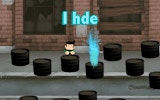
Platform Ball Jump Online is built around a single interaction: tap and hold to draw a trajectory line toward the next platform, then release to make the ball jump. On PC, keyboard controls are also available. The ball follows physics-based movement, so the arc you see is the arc you get. Landing safely on a platform is the only way to continue. Miss, and the run ends. The trajectory line gives you a clear preview, but it does not guarantee a perfect landing. Wind, speed, or platform placement are not mentioned in the source, so the challenge comes from reading the line and committing to the jump.
Time as a Resource
Each successful landing adds extra time to your clock. That turns the game into a risk-reward system: you can play safe and aim for the center of every platform, or you can rush to reach a farther platform before time runs out. The clock is always ticking, so hesitation costs you. Players who plan two or three jumps ahead tend to last longer than those who react one platform at a time. The time bonus is not a fixed amount per platform, based on the description, but the general rule is that landing anywhere on a platform buys you more time.
Platform Variety and Obstacles
The landscape changes as you progress. Platforms vary in height and width, and obstacles appear to block direct paths. Narrow platforms demand more precise aiming, while taller platforms require a steeper arc. Obstacles force you to adjust your trajectory rather than repeat the same jump. Because the game is hyper-casual, these variations appear quickly, and the difficulty ramps up through layout rather than through new buttons or complex rules. The clean, family-friendly design keeps the focus on timing and precision.
Controls and Accessibility
Touchscreen, mouse, and keyboard inputs all work. The tap-and-hold mechanic is identical across devices, so switching between phone and PC does not change how you play. Construct 3 powers the game, which helps explain the stable performance and responsive controls mentioned in the source. There is no story, no character customization, and no multiplayer mode described. The entire experience is a single continuous run where your score is tied to how long you survive and how many platforms you clear.







Editorial Notes