Castle Challenge: Family Match

Reviews
Castle Challenge: Family Match delivers exactly what its name suggests: accessible, lighthearted competition for two players. The split-keyboard controls lower the barrier for younger or casual players, while the hit-based scoring and random events add just enough depth to keep rounds interesting. The co-op mode broadens its appeal beyond head-to-head rivalry. Its main limitation is the lack of solo play, so it requires a second person. Best suited for families or friends seeking a simple, safe action game.
Description
Competitive Dueling Mechanics
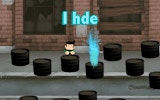
Castle Challenge: Family Match pits two players against each other in a head-to-head duel. One controls a blue warrior, the other a red warrior, and the goal is simple: land more hits than your rival before the timer expires. Each round is won by the player with the higher hit count. This scoring system keeps matches tense, as every successful strike directly affects the outcome. Dodging incoming attacks is just as important as landing your own, so matches become a back-and-forth of timing and positioning. [IMG_1]
Cooperative Wave Defense
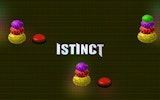
For players who prefer teamwork over rivalry, Castle Challenge offers a cooperative mode. Instead of fighting each other, both players join forces to defend against waves of playful opponents. This shifts the focus from outscoring a single rival to coordinating movements and attacks to survive. The cooperative mode uses the same intuitive controls, so switching between competitive and cooperative play requires no relearning. It is a natural fit for siblings or friends who want to work together rather than against each other. [IMG_2]
Controls and Accessibility
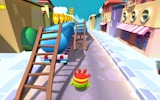
Controls are designed for immediate pick-up-and-play. The blue warrior moves with the WASD keys, while the red warrior uses the arrow keys. Additional keys handle actions like blocking, hitting, and changing tools. This split-keyboard layout means two players can share one keyboard without conflict. The simplicity makes the game accessible to younger players, yet the timing-based combat still offers depth for older ones. No complex button combinations are required, so new players can focus on reading their opponent rather than memorizing inputs. [IMG_3]
Random Events and Replay Value
Some game modes introduce random events that add unpredictability to each match. Special items or obstacles may appear on the field, forcing players to adapt their strategy on the fly. These events prevent matches from feeling repetitive and reward quick thinking. Because the events are random, no two rounds play out exactly the same, which extends the game's replay value for families looking for a quick, engaging activity. The family-friendly theme ensures that all content remains safe and appropriate for players of all ages.







Editorial Notes