Strawberry Runner Desert Dash
Reviews
Strawberry Runner Desert Dash keeps its scope tight: a turtle, a desert, cacti to jump, strawberries to collect, and a speed curve that does the work of difficulty design. The browser-based format and three-key control scheme make it approachable for casual players. Its limitation is variety—there are no levels, upgrades, or story elements described. Players who enjoy pure timing challenges will get the most from repeated runs.
Description
Desert Running Basics
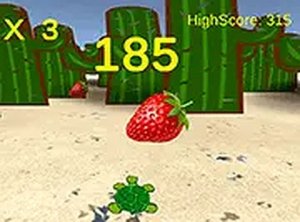
Strawberry Runner Desert Dash places a turtle in a sunlit desert where the only direction is forward. Cacti dot the path as obstacles, and strawberries serve as the scoring item. The turtle runs automatically; your job is to decide when to jump and when to shift left or right. Hitting a cactus ends the attempt immediately, so every input carries weight. Because the course never stops generating, there is no final level to finish—only the distance you manage before a mistake.
Controls and Movement
The game runs in a desktop web browser and uses the keyboard. The up arrow key triggers a jump over cacti. The left and right arrow keys steer the turtle laterally, letting you line up with strawberries or slip past an obstacle. Pressing any key starts the run. There is no download, no account setup, and no complex menu to learn. The control scheme is deliberately small so that the challenge comes from timing rather than memorizing inputs.
Scoring and Rising Speed
Each strawberry collected adds to your score. The longer you survive, the faster the turtle moves, which shortens the window for every jump and steer. This creates a natural difficulty curve: early seconds feel manageable, while later stretches demand sharper focus. The run ends on contact with a cactus, and the final score reflects both strawberries gathered and time survived. Because the pace increases, a high score is less about luck and more about reading the rhythm of upcoming obstacles.
Who It Suits
The bright, colorful visuals and upbeat tone make this a family-friendly option. Players who enjoy reflex-based challenges with a single clear goal will find the loop easy to understand. Those who prefer story, character upgrades, or level variety may find the endless format repetitive. The browser-based design means it works well for short sessions, and full screen mode is available for a larger view. Practice is the main way to improve, since the obstacle pattern and speed changes reward familiarity over time.









Editorial Notes