Grid Merge Puzzle
Reviews
Grid Merge Puzzle distills tile matching into a single high-stakes action: swipe correctly or the run ends. The procedurally generated grids prevent memorization, and the accelerating speed turns each session into a test of focus and reaction time. It is best suited to players who enjoy short, intense skill challenges rather than long strategic campaigns. The lack of a per-move timer keeps early play approachable, but the one-mistake rule may frustrate those who prefer a gentler learning curve.
Description
Merging Under Pressure
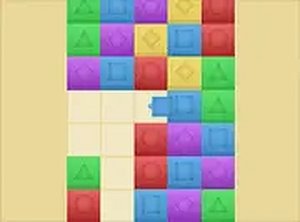
Grid Merge Puzzle is a tile-matching game built around a single, clear action: swipe a starter block toward a matching block on the grid. The swipe must be accurate because the game ends immediately if you hit an incorrect tile. After every successful merge, the blocks move automatically and the game speed increases, shrinking the window for each decision. That combination of one-mistake failure and accelerating pace is what defines the experience.
Procedural Grids and Rising Difficulty
Each session uses a procedurally generated grid layout, so the position of matching blocks changes every time you play. You cannot memorize a fixed pattern; instead, you learn to read the grid quickly and plan a safe path before swiping. As you progress, the speed increase demands sharper focus and faster reactions. The challenge is not about complex rules but about maintaining precision when the game gives you less time to think.
Controls and Accessibility
Grid Merge Puzzle supports both touchscreen and desktop controls. On mobile devices, you swipe with your finger; on desktop, you use a mouse. The game runs in a browser, is free to play, and requires no downloads or registration. There is no time limit per move, but the rising speed means later merges leave less room for hesitation. The visuals and sound effects are clean and family-safe, with no violent or inappropriate content, making it suitable for all ages.
Who It Suits and How to Improve
This is a game for players who enjoy quick decision-making and pattern recognition under pressure. Short sessions help build consistency before speed becomes overwhelming. Planning the swipe path ahead, staying calm as the pace increases, and learning from each failed attempt are practical ways to push higher scores. The simple mechanic is easy to pick up, but the accelerating difficulty makes mastery a gradual process.










Editorial Notes