Wave Run Reflex Challenge
Reviews
Wave Run Reflex Challenge does one thing and does it without clutter. The ball moves automatically, obstacles appear randomly, and your only decision is when to bounce. That simplicity makes it easy to start but hard to master, since random placement prevents memorization. Gem collection adds a risk-reward layer: chasing points can set up a worse position for the next obstacle. The clean visual style and browser-based access suit short sessions. Players wanting story, progression systems, or multiplayer will not find them here, but the game delivers a direct test of hand-eye coordination.
Description
What You Actually Do
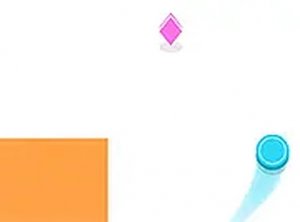
Wave Run Reflex Challenge is built around one repeated action: tapping or clicking to make a ball bounce. The ball travels forward on its own, so you never steer it left or right. Your only job is to decide when to bounce. Obstacles appear in random positions, which means you cannot memorize a route. Instead, you read the spacing ahead and react. Gems sit along the path, and each one you collect adds to your score. The tension comes from balancing gem collection with survival, because chasing a gem can put you in a worse position for the next obstacle.
Why Random Placement Matters
Random obstacle placement is the main reason the game stays interesting after several attempts. A pattern you handled well in one round may not appear again in the same form. That forces you to rely on reaction time rather than route memory. It also means a single mistake is rarely the result of bad luck alone; it usually comes from bouncing too early or too late. Players who improve tend to describe the game as rhythm-based, even though there is no music or beat to follow.
Controls and Device Support
There are no complex inputs to learn. A mouse click on desktop or a finger tap on mobile performs the same action. The game runs directly in a browser without downloads, and full-screen mode is available if you want fewer distractions. Because the control scheme is identical across devices, progress is more about your own timing than about which platform you use.
Who It Suits
This is a casual game designed for short sessions. Rounds are quick, and the scoring system gives you a clear reason to try again. It works well as a break-time activity or a warm-up for other reflex-based games. Players who prefer deep progression systems or story content will find it limited, but anyone looking for a straightforward test of hand-eye coordination will get what the title promises.









Editorial Notes