Sky Passage WebGL Challenge
Reviews
Sky Passage WebGL Challenge delivers a focused arcade experience built around one clear task: align your aircraft with a moving opening. The WebGL visuals run smoothly in a browser, and the lack of installation or purchases makes it easy to try. Difficulty rises steadily, which suits players who enjoy repeated attempts and gradual improvement. The main limitation is that the concept stays the same throughout, so variety comes only from speed and opening placement.
Description
Flight Path and Core Objective
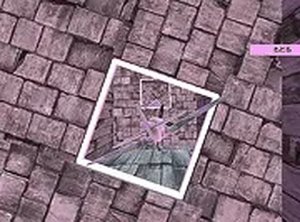
Sky Passage WebGL Challenge puts you in control of a small aircraft flying forward through a series of walls that move toward you. Each wall contains a single opening, and that opening shifts position from one wall to the next. Your task is to steer the plane through the gap without clipping the wall. The game runs in a browser using WebGL, so the 3D visuals load smoothly without any download or installation. The objective stays consistent, but the placement of each opening forces you to read the wall early and adjust your flight path in real time.
Controls and Moment-to-Moment Decisions
You rotate and move the aircraft using keyboard or mouse controls. As a wall approaches, you must align the plane with the opening. Small, precise adjustments work better than large, sweeping movements because the gap is only slightly wider than your aircraft. The game works best on desktop computers, and full screen mode is available for a clearer view of incoming walls. Each successful pass completes a level, and the difficulty increases as you progress, requiring faster reactions and sharper focus.
Difficulty Curve and Skill Development
Early walls move slowly and give you time to line up. Later walls arrive faster, and the openings may appear in less predictable positions. This progression rewards practice and patience rather than luck. The game focuses on hand-eye coordination and reaction time, and it is suitable for players of all ages. Because there are no in-app purchases and no installation, you can play in short sessions and gradually improve your consistency.
Approach to Improving
Focus on the approaching wall as early as possible to anticipate where the opening will be. Make small, precise adjustments to your aircraft's orientation instead of overcorrecting. Regular practice helps build the reaction speed needed for harder levels. Staying calm as the speed increases keeps your inputs steady, and each crash gives you information about what to adjust next. Consistency and patience are more useful than aggressive movements.










Editorial Notes