Kogama Team Parkour Adventure
Skill Teamwork Parkour Multiplayer Obstacle Course Family Friendly
Kogama Team Parkour Adventure
115
Developer: Pier Reign Labs
Published: 1720281600
Updated: 2026-09-30

Reviews

Kogama Team Parkour Adventure succeeds when a group treats block placement as a shared resource rather than a personal tool. The stages vary enough to keep route planning interesting, and the family-friendly presentation lowers the barrier for younger or less experienced players. The main limitation is that the game assumes cooperation; without teammates, the core mechanic loses much of its purpose. Groups who communicate well will get the most from it.

Description

Cooperative Obstacle Design

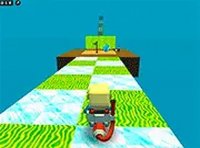
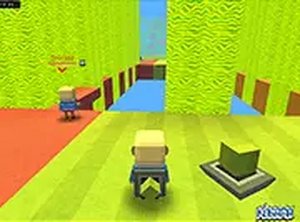
Kogama Team Parkour Adventure is built around a simple premise: no single player can clear a stage alone. Up to four participants share the same course, and each stage mixes jumping, running, and trap avoidance with a block-placement mechanic. Cube items scattered through the level let a player create a platform or bridge on the spot. That block might lift a teammate to a higher ledge or span a gap that would otherwise stop the group. The design forces decisions about who collects cubes, where to spend them, and when to hold back for a slower teammate.

Movement, Traps, and Team Roles

Controls are limited to running, jumping, and using collected cubes, so the difficulty comes from timing and coordination rather than complex inputs. Traps are placed to punish rushed movement, and a mistimed jump can drop a player behind. Because blocks can be placed anywhere a cube is available, teams naturally split into roles: one player scouts ahead, another saves cubes for rescues. The finish line only matters when the whole group reaches it, which keeps the pace cooperative instead of competitive.

Stage Variety and Session Flow

Each stage introduces a new layout, so the route through a course changes from one session to the next. That variety keeps the block-placement decisions fresh, since a cube that solves one stage's gap may be better saved for a vertical climb in another. Sessions are short and repeatable, which suits the browser format, and the family-friendly visuals keep the tone light even when a trap sends someone back to a checkpoint.
Editorial Notes

Compatibility

This H5 game runs smoothly on:
• Desktop computers (Windows / Mac) • Mobile phones (iPhone / Android)
• Tablets (iPad / Android)
🌐 Best experienced with Chrome, Safari, or Edge

Faq

Does Kogama Team Parkour Adventure require a download or account?
No download is needed. The game runs directly in a desktop browser. You control your character with a keyboard or mouse. Because it is a Kogama title, you may need a Kogama account to join multiplayer sessions, but the game itself does not require installing any software.
Can I play Kogama Team Parkour Adventure solo?
The game is designed for up to four players working together, and the block-placement mechanic assumes teammates who need help reaching platforms. Playing alone removes the cooperative element that defines each stage, so the experience is best with a full group. The input does not describe a dedicated single-player mode.
How do the cube items and block placement work?
Players collect cube items found in each stage. A collected cube can then be placed as a block, creating a platform or bridge. These blocks help teammates reach higher areas or cross gaps. Cubes are a shared resource in practice, so deciding when and where to place them is the main strategic choice in every stage.
What kind of traps and obstacles will I face?
Each stage includes traps that test reflexes and timing. The input describes them as obstacles that can slow progress, not as combat enemies. Avoiding them depends on reading the layout and jumping at the right moment. Because layouts change between stages, you cannot rely on memorizing a single trap pattern.
Is Kogama Team Parkour Adventure suitable for children?
The game is tagged as family friendly and uses colorful visuals with no graphic content. The challenge comes from parkour timing and cooperation, not violence. Younger players may need help with precise jumps, but the cooperative structure means a more skilled teammate can place blocks to assist them through difficult sections.
What is the best way to help a teammate who keeps falling behind?
Save a cube and place a block beneath or beside the struggling player so they can climb back up or cross a gap. Communicating which route to take also helps, since the group only succeeds when everyone reaches the finish. Rushing ahead often costs more time than waiting and building a path.