Precision Spin Arcade Game
Reviews
Precision Spin Arcade Game strips skill gaming down to a single, clear task: rotate a stick into a safe zone without touching edges. The difficulty curve is gradual, and each level changes the layout, so players cannot rely on memorized motions. It suits anyone who enjoys short, focused attempts and measurable improvement. The main limitation is the lack of stated progression systems beyond increasing difficulty, and it is built for desktop browsers rather than mobile devices.
Description
Core Objective and Moment-to-Moment Play
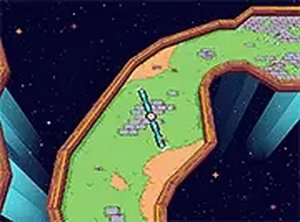
Precision Spin Arcade Game asks one thing of the player: rotate a stick so it travels across a street and settles inside a marked safe zone. Contact with any edge or obstacle ends the attempt. That single rule shapes every action. You are not managing resources or dodging enemies; you are reading a layout and deciding when to release or adjust the stick's rotation. The challenge sits in the gap between seeing the safe zone and executing the movement without overshooting or clipping a boundary.
Controls and Input Options
The stick responds to keyboard or mouse input, so players can choose whichever feels steadier. A mouse offers fine-grained rotation, while keyboard input may suit those who prefer discrete taps. Full screen mode is available for a less cluttered view, which matters because small visual distractions can translate into timing errors. No downloads or registration are required, and the game runs in a desktop browser, so starting a session takes seconds.
Difficulty Curve and Level Layouts
Early levels use simple street layouts with generous safe zones, letting new players learn how the stick behaves. As you progress, layouts change and the margin for error narrows. Each level introduces a new arrangement rather than repeating the last one, so memorizing a single motion is not enough. The gradual increase in difficulty is the game's main progression system: there are no upgrades or unlockable items, only increasingly demanding precision tasks.
Who This Suits and How to Improve
This is a game for players who enjoy short, focused attempts and measurable improvement. A session can last a few minutes or stretch longer if you keep retrying a tricky layout. The most useful habit is to start each level slowly, observe the street and safe zone, then adjust speed once the motion feels predictable. Rushing tends to cause edge contact. Because the game is family-friendly and free to play, it works as a low-commitment coordination exercise for a wide range of ages.










Editorial Notes